
Babolat Pure Aero 98 Spec-Based Review (2026)


The tennis world is still buzzing after that electric 2026 Australian Open final, and if you saw Carlos Alcaraz hoisting the trophy in Melbourne, you probably noticed the flashes of gray, yellow, and white in his hands. That “deadly weapon” is the 2026 Babolat Pure Aero 98, and today, we’re diving deep into why this specific frame has become the gold standard for the modern aggressive player.
At $299 unstrung, this isn’t just a racquet; it’s an investment in surgical precision and heavy-duty spin. Let’s break down whether this frame belongs in your bag or if it’s strictly for the Alcaraz-level “mutants” of the tour.
The First Impression: Style and Substance
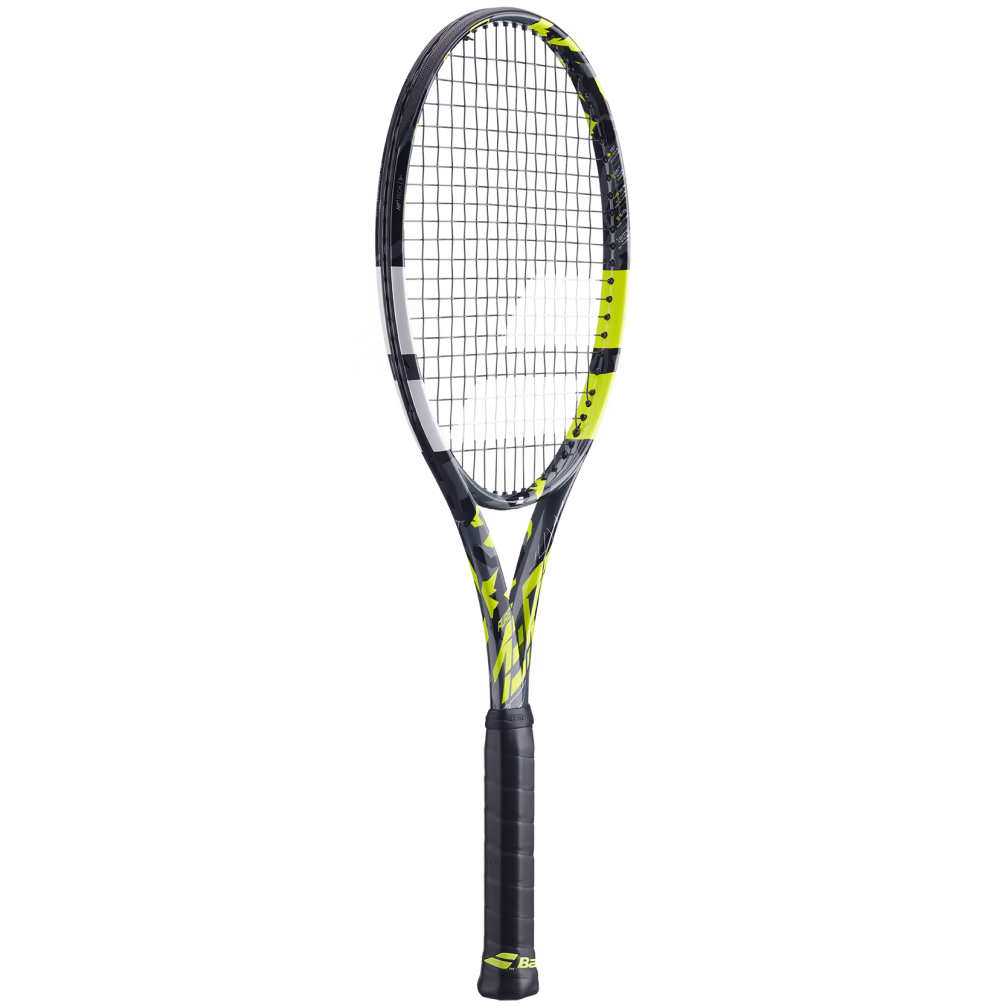
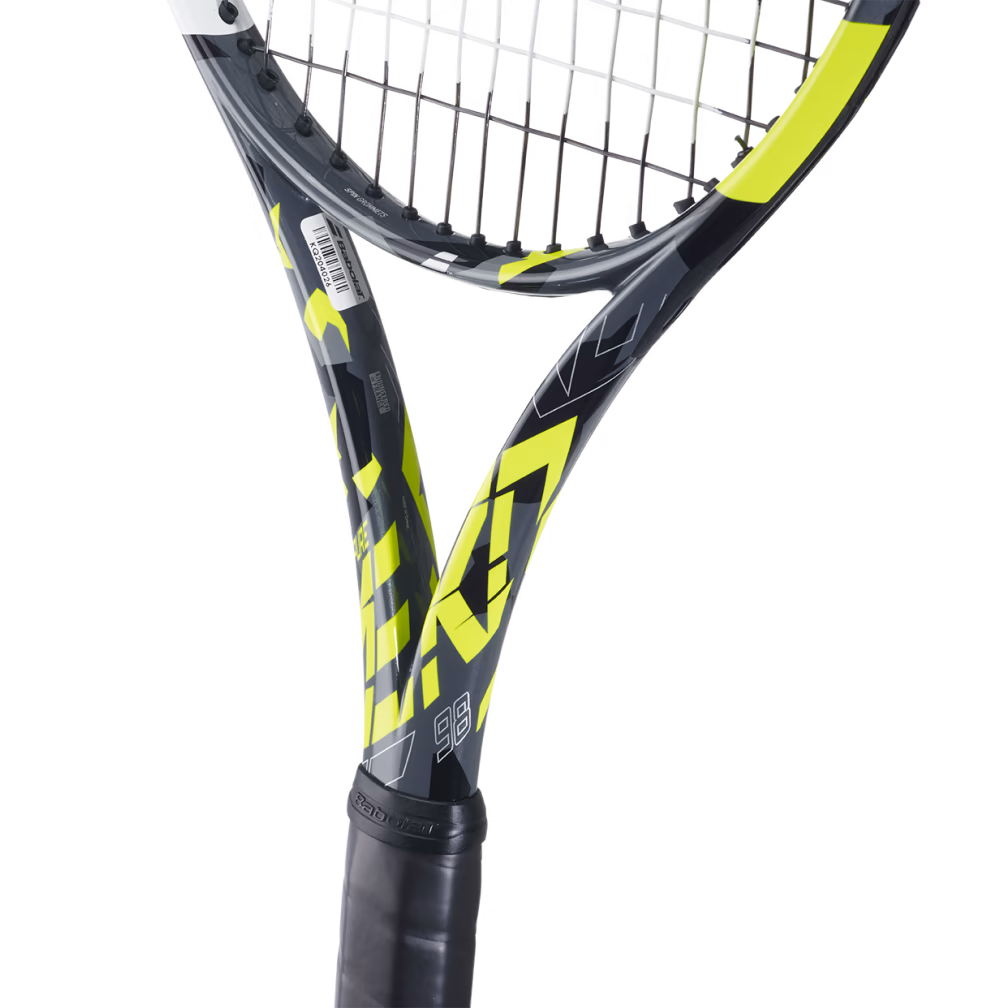
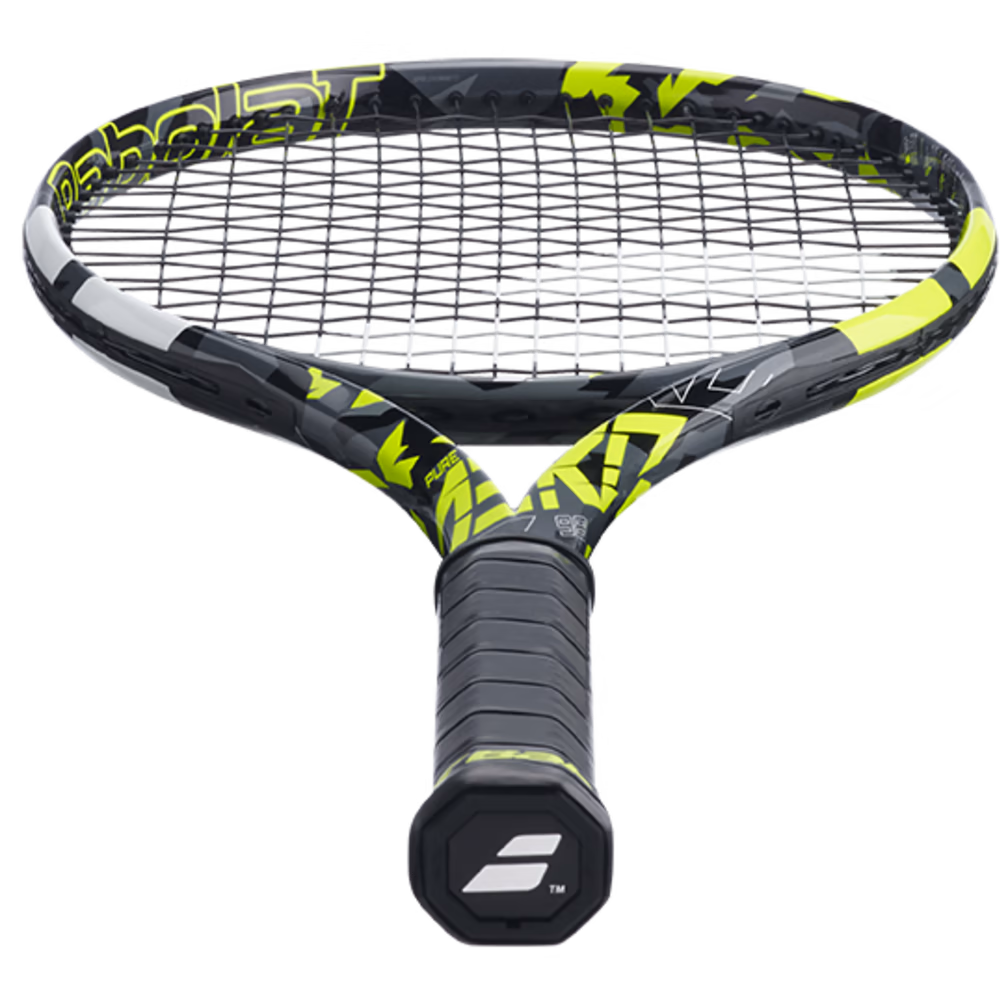
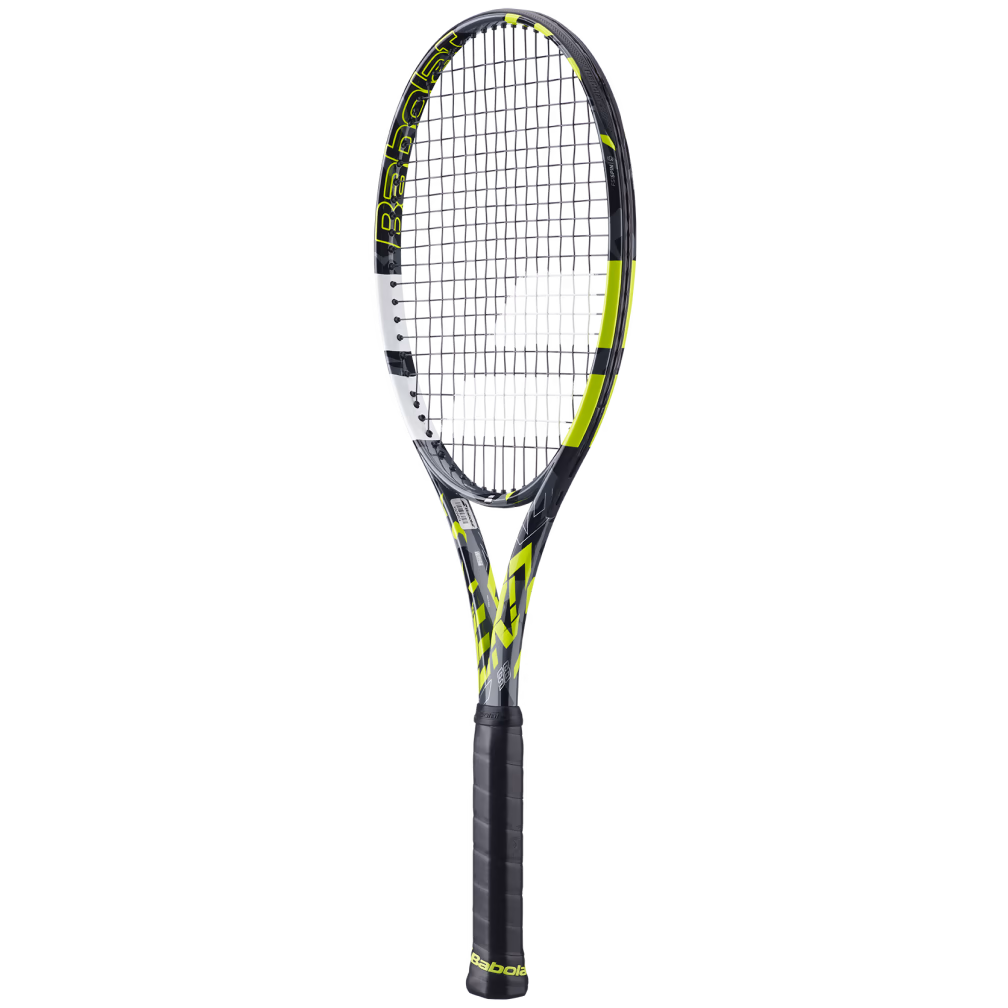
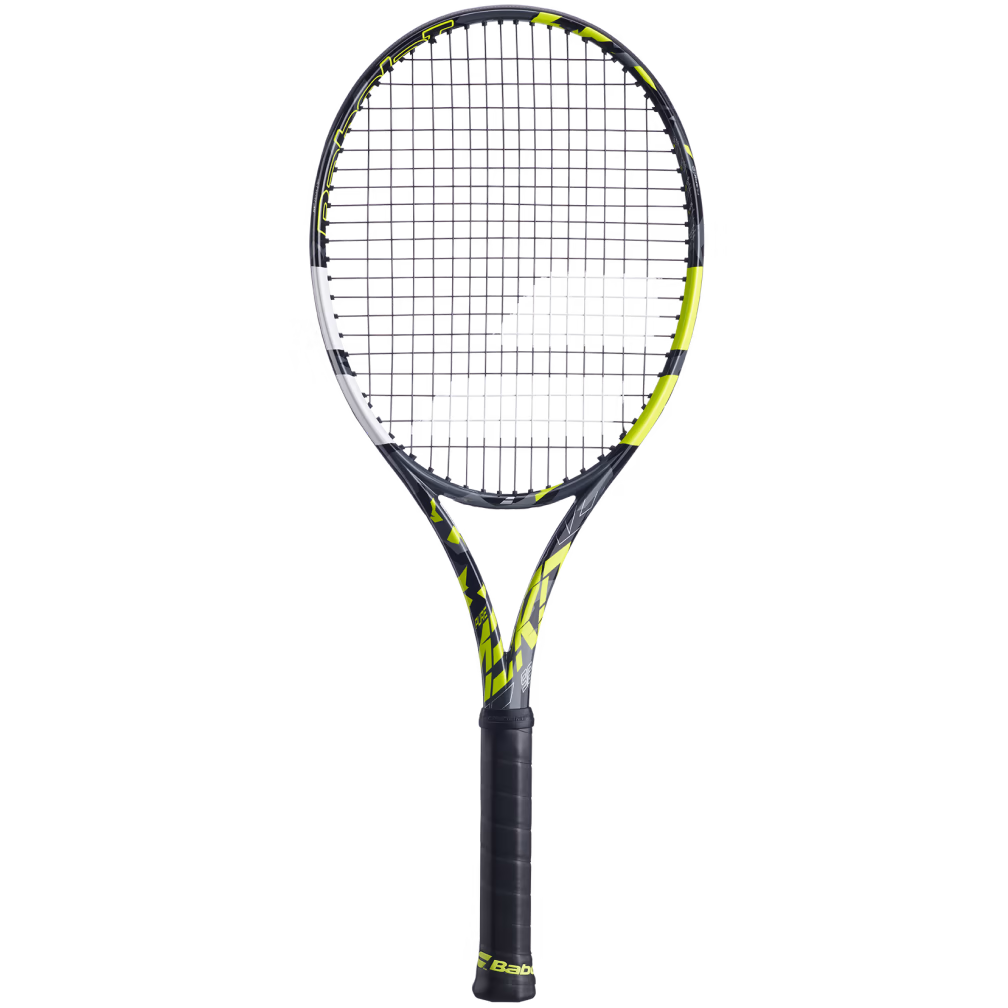
The 2026 edition keeps the iconic “Aero” DNA but refines it. The Gray/Yellow/White cosmetic looks incredibly sharp—modern, fast, and aggressive without being obnoxious. But once you pick it up, you realize the beauty is more than skin-deep.
Unlike the standard Pure Aero (which sports a 100 sq. inch head), the Pure Aero 98 is the “refined sibling.” It’s designed for players who don’t just want to hit the ball hard, but want to tell the ball exactly where to go. With its thinner beam and smaller head size, it whispers (or rather, screams) control.
Technical Characteristics: The “Tale of the Tape”
Before we get into the “feel,” let’s look at the hard data. This racquet is built for those who have the strength to swing fast and the skill to find the sweet spot.
| Feature | Specification |
| Head Size | 630 cm² / 98 in² |
| Weight (Unstrung) | 305 g / 10.7 oz |
| String Pattern | 16/20 |
| Stiffness (RA) | 70 +/- 3 |
| Balance (Unstrung) | 315 mm (Head Light) |
| Beam Width | 21 / 23 / 22 mm |
| Composition | Graphite |
| Swing Weight | 295 |
Why It’s the Choice of Champions
It’s no coincidence that Carlos Alcaraz, Felix Auger-Aliassime, and Holger Rune all gravitate toward this frame. In the 2026 Australian Open, Alcaraz showed us exactly what this racquet is capable of: hitting heavy, dipping passing shots that seemed to defy physics.
1. Controlled Spin (The 16/20 Pattern)
The standard Aero usually runs a 16/19 pattern, but the 98 uses a 16/20 pattern. This extra cross string tightens things up just enough to give you a lower launch angle. You still get that legendary Babolat “bite” on the ball, but your flatter shots won’t fly to the back fence. It’s the perfect balance for players who play “fast and flat” but want topspin as a safety net.
2. NF²-Tech: The Flax Revolution
If you played with Babolats a decade ago, you might remember them being a bit “stiff” or “chattery.” Those days are gone. The 2026 model uses NF²-Tech, which integrates natural flax fibers into the racquet head and handle.
Why Flax? It’s an incredible shock absorber. It filters out the “bad” vibrations while leaving the “good” feedback, so you actually feel the ball on the strings. This is vital when you’re trying to feather a drop shot like Alcaraz.
3. Aeromodular 3
The frame shape is a masterpiece of aerodynamics. The Aeromodular 3 design integrates the bumper and grommets directly into the frame. This reduces wind resistance, allowing you to whip the racquet through the air faster. More racquet head speed = more spin. Simple math, devastating results.
On-Court Performance: How It Actually Plays
Groundstrokes: Attack Mode
If you like to take the ball early and move forward, you’re going to love this. The 305g weight provides enough “plow-through” to handle heavy incoming pace, but the 98 sq. inch head makes it feel incredibly maneuverable. On the forehand, it feels like you’re swinging a scalpel rather than a club.
Volleys: Stability personified
Many “spin racquets” feel floppy at the net. Not this one. The 21/23/22mm beam is thin enough for feel but thick enough for stability. When you’re facing a 100mph passing shot, the Pure Aero 98 doesn’t twist in your hand.
Serving: The Precision Tool
You might not get the “free power” that you’d find in a Pure Drive, but the Pure Aero 98 rewards good technique. It’s an absolute beast for kick serves and wide slices. The precision allows you to hit your spots with much more confidence than a 100 sq. inch frame.
The Verdict: Who is this for?
The Babolat Pure Aero 98 (2026) is not a “beginner’s racquet.” It’s a precision instrument for high-performance competitors. If you’re a 4.5+ NTRP player who finds the standard Pure Aero a bit too “wild,” this is your soulmate.
Pros:
- Surgical precision on big swings.
- Exceptional vibration dampening thanks to flax fibers.
- Elite stability for a 305g racquet.
- Available in matched pairs (max 1g difference) for serious competitors.
Cons:
- Smaller sweet spot than the standard 100 sq. in. Aero.
- Requires consistent footwork and swing speed to unlock its potential.
- The $299 price point is at the premium end of the market.
Pro Tip for Setup
To get the most out of this frame, Babolat recommends RPM Blast or RPM Rough at a tension of 50-59 lbs (23-27 kg). If you want that “Alcaraz feel,” try a hybrid setup with Natural Gut in the mains and RPM Blast in the crosses—it’s pure magic.
Whether you’re aiming for a local tournament win or just want to feel like a Grand Slam champ during your Sunday clinics, the 2026 Pure Aero 98 is a masterclass in modern racquet engineering.
Comparison with Yonex VCORE 98
Since you’re looking at the Babolat Pure Aero 98, it’s impossible not to mention its “arch-rival” in the 98-square-inch spin category: the Yonex VCORE 98 (2026 Edition).
Both racquets are designed for the modern aggressive baseliner, but they achieve their results through very different engineering philosophies. Here is the head-to-head breakdown.
Technical Specs Comparison: 2026 Editions
| Feature | Babolat Pure Aero 98 | Yonex VCORE 98 |
| Head Size | 98 sq. in. (Standard) | 98 sq. in. (Isometric) |
| Weight (Unstrung) | 305 g | 305 g |
| String Pattern | 16 / 20 (More Control) | 16 / 19 (More Snapback) |
| Stiffness (RA) | ~70 (Crisper/Power) | ~66 (Softer/Feel) |
| Beam Width | 21 / 23 / 22 mm | 23 / 23.5 / 22 mm |
| Balance | 315 mm (7 pts HL) | 315 mm (7 pts HL) |
| Key Tech | NF²-Tech (Flax Fibers) | Servo Filter & 2G-Namd |
1. The Sweet Spot: Precision vs. Forgiveness
The biggest difference lies in the head shape. The Babolat uses a traditional oval shape, which results in a very concentrated, surgical sweet spot. When you hit it clean, the power is explosive.
The Yonex, however, features their signature Isometric head shape. This design squares off the hoop at 10 and 2 o’clock, which effectively makes the sweet spot feel about 7-11% larger. If you have a tendency to hit slightly off-center during long, tiring rallies, the VCORE 98 is significantly more forgiving than the Pure Aero 98.
2. Feel and Vibration: Flax vs. Servo Filter
- Babolat (NF²-Tech): Uses natural flax inserts. The sensation is crisp and connected. You feel “one with the ball,” which is great for touch shots and knowing exactly where your shot is landing.
- Yonex (Servo Filter): Uses a transparent, elastic film between graphite layers. The feel is plush and dampened. It filters out almost all harsh vibrations, making it one of the most comfortable 98s on the market for players with sensitive elbows.
3. Playability: Who Wins Where?
The Forehand & Serves: Babolat Pure Aero 98
The aerodynamic “Aero” beam of the Babolat allows it to cut through the air faster than the Yonex. On the serve and the forehand, this translates to higher racquet head speed. If you play like Alcaraz—heavy, whipping topspin that jumps off the court—the Babolat is the superior tool.
The Backhand & Volleys: Yonex VCORE 98
The VCORE 98 feels like a “rock” on contact. Because the beam is slightly more consistent (23mm throughout the middle), it offers a more stable platform. Many one-handed backhand players prefer the VCORE because it doesn’t twist as easily as the whippier Aero 98. At the net, the VCORE’s stability makes it easier to “block” back heavy passing shots.
Which one should you choose?
Choose the Babolat Pure Aero 98 if: > You are an aggressive player who dictates with a massive forehand, values a “crisp” response, and wants the same surgical precision that Carlos Alcaraz used to win the 2026 Australian Open.
Choose the Yonex VCORE 98 if: > You want a more comfortable, plush feel, a larger/more forgiving sweet spot, and a racquet that feels slightly more stable on defensive blocks and volleys.


